


Embassy held first South Korea Overseas Election;
- DATE
- 2012-04-02
Koreans living overseas began to cast ballots in a national election for the first time, as their home country is set to hold general elections on April 11. According to the National Election Commission (NEC) it is estimated that 2.23 million South Koreans live away from their homeland and this is the first opportunity for them to take part in voting.
Overseas South Koreans became eligible to participate in domestic elections after related legislation was passed by the National Assembly in 2009.
The right to vote in national elections by South Koreans living overseas largely resulted from a campaign waged by Koreans in Japan. In 2004, a group filed a lawsuit in South Korea asserting that being deprived of the right to vote was a violation of their human rights.
A 2007 ruling by South Korea's constitutional court agreed with this. As a result, the public offices election law was revised in 2009 to allow South Koreans living overseas to vote from April of this year, starting with the National Assembly election. The Embassy of the Republic of Korea in PNG was one of the 158 diplomatic missions in 107 countries worldwide that took part in voting. The embassy was opened for voting from Friday 30th March and finished on Monday, 2nd April, 2012 and the official voting hours were from 8 a.m to 5 p.m.
According to the Overseas Voting National Election Commission in Papua New Guinea, sixty-nine (69) out of eighty- six (86) registered voters, cast their ballots at the Embassy of the Republic of Korea in Papua New Guinea during the four-days (4) voting period.
There are two processes to vote in the new South Korea overseas election system and these are: 1), every South Korean living overseas must go to their nearest embassy/ mission and register their names to vote. 2). after registering, the voter must turn in person to cast their vote during the voting period at the Embassy. Failure to meet the two requirements would result in not taking part in vote. Registered voters are required to carry a valid form of photo identification such as a passport or a resident registration card.
Compared to the other South Koreans diplomatic missions, the turnout for the registered South Korean voters in Papua New Guinea was good despite the rainy weather during the weekend.
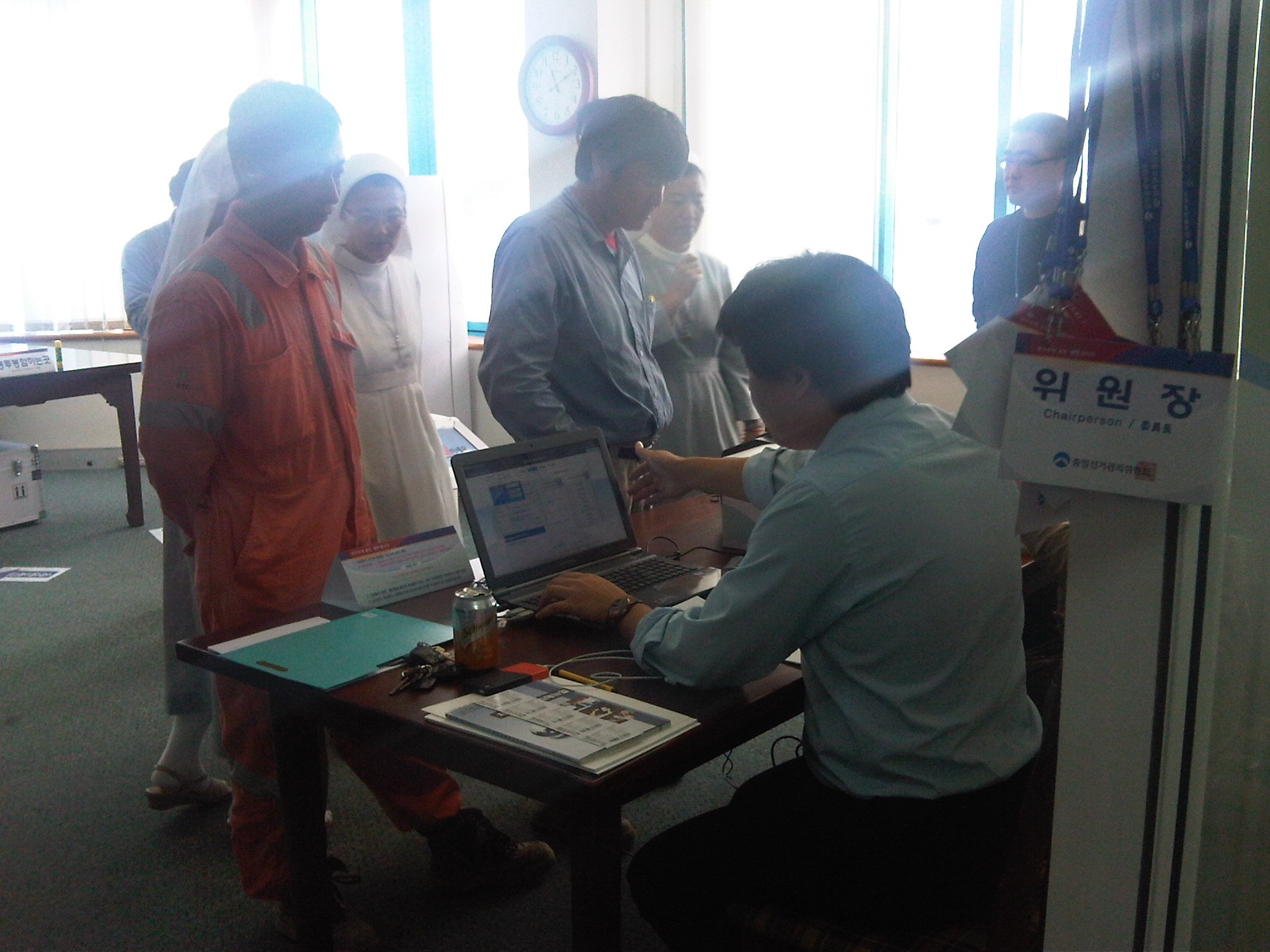
(picture: South Korean voters in PNG casting their votes at the Embassy with an Election officer assisting them) The overseas ballots will be sent back to South Korea to be kept by the NEC until the vote-counting begins after the April 11 elections. The actual parliamentary elections in South Korea will begin on the 11th April, 2012, and the upcoming presidential race slated for December. President Lee Myung-bak's single five-year term ends in February 2013 and he is forbidden by law to run for a second term.
Other overseas voting like New York drew little attention from the outset and there is a call for an improvement of the voting system. "In order to encourage higher voter turnout, the system needs to be changed so that overseas residents can register by mail without having to visit the missions, and more polling stations should be set up,"

An election officer at the Embassy in PNG during the voting.
South Korean sisters at Caritas Technical Secondary taking part in voting at the Embassy.

- Embassy of the Republic of Korea
to the Independent State of Papua New Guinea - Address : Fourth Floor, Pacific MMI Building, Section 21, Allotments 2 & 3, Champion Parade, P.O. Box 381, Port Moresby
- Tel : (+675) 321-5822~5
After Working Emergency Line : (+675) 7394-6778
Fax : (+675) 321-5828
Hours of Operation : Monday~Friday 08:00∼12:00, 13:30∼16:00


