


Embassy Social Media


About the Mission
Notice

- About the Mission
- Notice
- Font Size
-


World Cup Stadium and Cities in Korea
- DATE
- 2010-02-23
SEOUL
 |
Stadium Concept
|
|
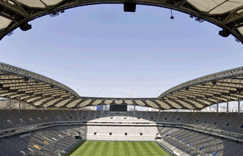
A bird’s eye view of the stadium reveals a large kite. The central theme of the stadium revolves around this image of a ‘kite’; to let fly hopes of victory blooming culture, and peace to all mankind.
|
|
 |
Host City Introduction
|
|
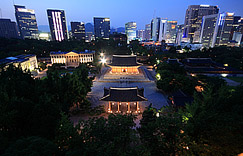
Seoul – “Clear, charismatic Seoul”
|
|
|
Population 10.45mil., Area 605㎢ (2008.12.31)
■ Capital of Korea, Business hub of Northeast Asia
■ Political, economic, educational, cultural centre of Asia
■ Home Team: FC Seoul
|
|
 |
FC Seoul
|
|
■ Official Website: http://www.fcseould.com
■ Home Stadium: Seoul World Cup Stadium
■ History: 1983 Founded
2000 Champions, League
2001 Champions, Super Cup
|
INCHEON
 |
Stadium Concept
|
|
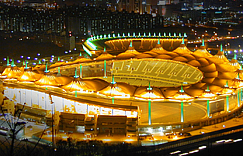
The architectural motif of a sailing ship highlights Incheon’s regional identity as center of international trade, and the roof which was created in the likeness of a mast and sail emphasizes the dynamic image of the terrain.
|
|
 |
Host City Introduction
|
|
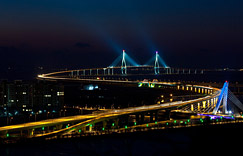
Incheon – “The hope of Korea, first-class city Incheon”
|
|
|
Population 2.75mil., Area 1,010㎢ (2009.9.30)
■ Free Economic Zone
■ An international city with a matrix of high-tech IT-BT-R&D industries, logistics, finance and tourism business
■ Home Team: Incheon United FC
|
|
 |
Incheon United FC
|
|
■ Official Website: http://www.incheonutd.com
■ Home Stadium: Incheon Munhak Stadium
■ History: Founded in 2004
|
SUWON
 |
Stadium Concept
|
|
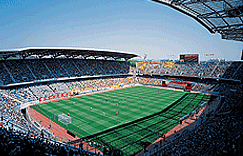
The Suwon Football Stadium was built as a ports complex, complete with leisure facilities for the purpose of enhancing the spectator’s experience. Media coverage was also considered, with strategic placements of stands and lighting to offer the best screen coverage possible for the pleasure of fans watching the game at home.
|
|
 |
Host City Introduction
|
|
Suwon – “A green city of hope and happiness for citizens”
|
|
|
Population 1.09mil., Area 121㎢ (2009.1.1)
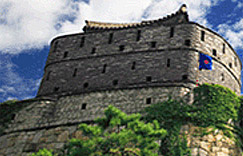
■ The southern gates of Seoul, home of the World Heritage site, “Hwa-Sung”
■ Modern Technology and tradition exist side-by-side, a centre of culture and tourism
■ Home Team: Suwon Samsung Bluewings
|
|
 |
Suwon Samsung Bluewings
|
|
■ Official Website: http://www.fcbluewings.com
■ Home Stadium: Suwon World Cup Stadium
■ History:
1995 – Founded 2000 – Champions, 2nd Super Cup – Champions, Adidas Cup – 4th Place, 19th Asian Club Championships 2001 – Champions, Adidas Cup – Champions, 20th Asian Club Championships – Champions, 7th Asian Super Cup 2002 – Champions, 21st Asian Club Cup – Champions, 9th Asian Super Cup 2004 – Champions, Samsung Hausen K-League 2005 – Champions, A3 Champions Cup – Champions, K-League Super Cup – Champions, K-League Hausen Cup 2008 – Champions, K-League Hausen Cup 2008 – Champions, Samsung Hausen K-League |
GOYANG
 |
Stadium Concept
|
|
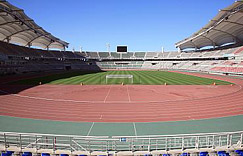
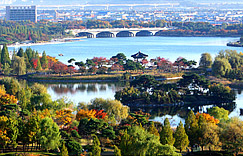
The stadium design is based on Korea’s traditional housing customs from the representation of the second floor deck, stylobate, and roof to the application of traditional on-third elevation throughout the structure. Restrooms of stylobate are composed of aluminum panels to crate for an even keel. Also traditional lattice form is used in the bulk of stadium facilities, including gates, fences, and rails so that spectators can enjoy both football matches and Korean tradition.
|
|
 |
Host City Introduction
|
|
Goyang – “Goyang of dreams, Dream of Goyang”
|
|
|
Population 0.94mil., Area 267㎢ (20008.12.31)
■ Northern gates of Seoul
■ Refreshing green environment
■ Home Team: Goyang KB Star (National League)
|
|
 |
Goyang KB Star
|
|
■ Official Website: http://www.kbstar.com
■ Home Stadium: Goyang Stadium
■ History:
1972 Founded 2003 Champions, Hyundai Motors Cup K2 League 2004 Champions, Hyundai Motors Cup K2 League 2006 Champions, National League 2008 National Sports Festival |
CHEONAN
 |
Stadium Concept
|
|
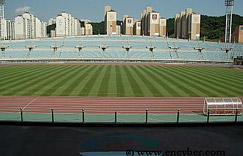
Cheonan Stadium and the city are already equipped with great management skills that resulted from hosting various international sports events over the last few years. In the same context, the stadium provides excellent transportation access and leisure facilities to spectators who visit Cheonan Stadium.
|
|
 |
Host City Introduction
|
|
Cheonan – “Cheonan, a future hope”
|
|
|
Population 0.55mil., Area 636㎢ (2009.12.31)
■ A transportation hub, every corner of the country reached within 2 hours
■ Government-funded high-tech science city
■ Home Team: Cheonan City FC (National League)
|
|
 |
Cheonan City FC
|
|
■ Home Stadium: Cheonan Stadium
■ History: 2008 Founded
2009 2nd Place, President’s Cup
|
JEONJU
 |
Stadium Concept
|
|
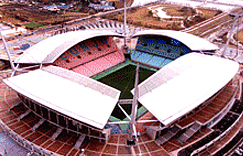
The Jeonju World Cup Stadium takes on the shape of the “Hap-juk seon”, a beautiful traditional bamboo fan, and the four columns supporting the roof were made in the image of traditional totem poles. The cables connecting the main frame structure symbolize the 12 strings of the “Gayageum”, a traditional Korean instrument.
|
|
 |
Host City Introduction
|
|
Jeonju – “Tradition and modernity, a new industrial city”
|
|
|
Population 0.64mil., Area 313㎢ (2008.12.31)
■ Provincial capital of North Jeolla
■ A city of history and tradition, breathing with culture, art and tourism
■ Home Team: Jeonbuk Hyundai Motors
|
|
 |
Jeonbuk Hyundai Motors
|
|
■ Official Website: http://www.hyundai-motorsfc.com
■ Home Stadium: Jeonju World Cup Stadium
■ History: 1994 Founded
2000 Champions, 5th FA Cup
2002 2nd Place, Asian Winners Cup
2003 Champions, Hanabank FA Cup
2005 Champions, Hanabank FA Cup
2006 Champions, AFC Champions League
|
DAEJEON
 |
Stadium Concept
|
|
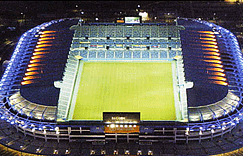
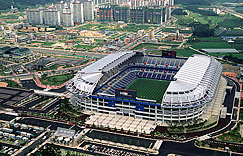
The Daejeon World Cup Stadium represents the elegant beauty of the traditional Korean residence, without any unnecessary decoration, simple and yet demonstrating a gracefully polished structural dynamism.
|
|
 |
Host City Introduction
|
|
Daejeon – “Happy with the citizens, Daejeon
|
|
|
Population 1.50mil., Area 540㎢ (2009.12.1)
■ Transportation hub of Korea
■ Centre of Korean science and technology, administrative city
■ Home Team: Daejeon Citizen
|
|
 |
Daejeon Citizen
|
|
■ Official Website: http://www.fcdaejeon.com
■ Home Stadium: Daejeon World Cup Stadium
■ History: 1997 Founded
2001 Champions, FA Cup
|
DAEGU
 |
Stadium Concept
|
|
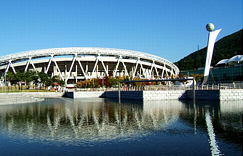
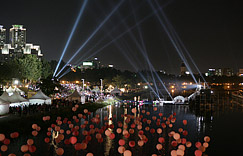
The stadium boasts a seating capacity of 70,140, enough to host the finals and semi-finals games for major tournaments. 74% of the seats are screened with a Teflon(PTFC) roof, allowing natural lighting for the spectators.
|
|
 |
Host City Introduction
|
|
Daegu – “A city of hope, 1st-class Daegu”
|
|
|
Population 2.51mil., Area 884㎢ (2009.6.30)
■ Host City, 2011 IAAF World Championships Daegu
■ Host City, 2012 International Congress of Entomology
■ Host City, 2013 World Energy Congress
■ Home Team: Daegu FC
|
|
 |
Daegu FC
|
|
■ Official Website: http://www.dagufc.co.kr
■ Home Stadium: Daegu Stadium
■ History: Founded March 19th 2003
|
POHANG
 |
Stadium Concept
|
|
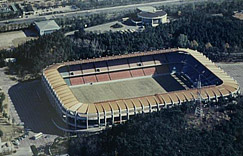
Pohang Steelyard is the first football stadium to be built in Korea. Its stands were constructed in a balcony shape so that spectators could enjoy football matches efficiently from anywhere, and the roof blocks of sunlight in order to help mange the field better.
|
|
 |
Host City Introduction
|
|
Pohang – “A city of hope and dreams, global Pohang”
|
|
|
Population 0.51mil., Area 1,128㎢ (2009.12.30)
■ First city to meet sunrise on the peninsula
■ Korea’s steel mill
■ Home Team: Pohang Steelers
|
|
 |
Pohang Steelers
|
|
■ Official Website: http://www.steelers.co.kr
■ Home Stadium: Pohang Football Stadium
■ History: 1973 Founded
2007 Champions, Samsung Hausen K-League
2008 Champions, Hanabank FA Cup
2009 Champions, Asian Champions League
2009 3rd Place, FIFA Club World Cup
|
ULSAN
 |
Stadium Concept
|
|
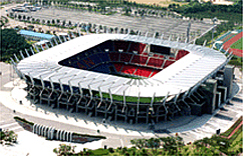
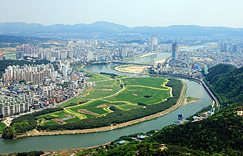
The external shape of the main stadium takes on the form of the crane, symbolizing the advancement of 21st century Ulsan-Asan industrial capital of the Pacific Rim.
|
|
 |
Host City Introduction
|
|
Ulsan – “Blue Ulsan, the dynamic industrial capital”
|
|
|
Population 1.13mil., Area 1,058㎢ (2009.10.31)
■ A port located in the centre of Eastern Asia
■ High-tech industrial city
■ Home Team: Ulsan Hyundai Tigers
|
|
 |
Ulsan Hyundai Tigers
|
|
■ Official Website: http://www.horangifc.co.kr
■ Home Stadium: Ulsan Moonsoo World Cup Stadium
■ History: 1983 Founded
2005 Champions, Samsung Hausen K-League
2006 Champions, A3 Champions Cup
|
GWANGJU
 |
Stadium Concept
|
|
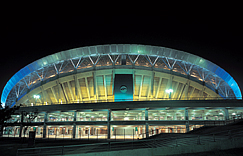
The roofline represents the image of Mt. Mudeung(1,187m above sea level), with ridges that remind one of a mother’s smooth shoulder lines. The natural topography has been utilized as much as possible to emphasize the overall volume of the structure, with lines and connections flowing as naturally as possible in harmony with the exits of the stadium located at the centre of the stand.
|
|
 |
Host City Introduction
|
|
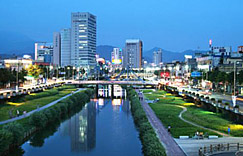
Gwangju – “High-tech industry, Cultural capital, 1st-class Gwangju, 1st-class Citizens”
|
|
|
Population 1.43mil., Area 501㎢ (2009.6.30)
■ Located in the middle of Korea’s southwest region
■ Administrative, military, economic, social, cultural centre of the Honam Region
■ Home Team: Gwangju Sangmu Phoenix
|
|
 |
Gwangju Sangmu Phoenix
|
|
■ Official Website: http://www.gwangjusmfc.co.kr
■ Home Stadium: Gwangju World Cup Stadium
■ History: Founded on January 11th 1984
|
BUSAN
 |
Stadium Concept
|
|
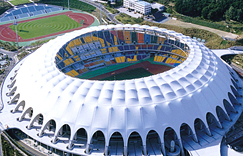
In preparation for a global event, the internal space required was created by installing the main deck in a circular fashion like the rings of the planet Saturn, symbolizing a central union of the inner and outer universe. This represents a braking away from the limits of regionalism.
|
|
 |
Host City Introduction
|
|
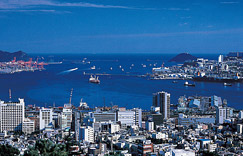
Busan – “Maritime capital of the Northern Asian era”
|
|
|
Population 3.58mil., Area 766㎢ (2009.6.1)
■ Largest maritime logistics centre of Korea
■ The city of Asia’s largest movie festivals and conventions
■ Home Team: Busan I’Park
|
|
 |
Busan I’Park
|
|
■ Official Website: http://www.busanipark.co.kr
■ Home Stadium: Busan Asiade Main Stadium
■ History: 1983 Founded
1984 Champions, Korean Super League
2000 Champions, Philip Morris Cup
2004 Champions, Hanabank FA Cup
|
JEJU
 |
Stadium Concept
|
|
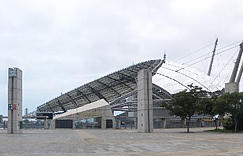
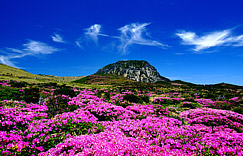
The stadium symbolizes the great progress of the people of Jeju, sailing to the five oceans and six continents. The shape of the stadium is base on modern concepts that represent the nature and beauty of the Island of Jeju.
|
|
 |
Host City Introduction
|
|
Jeju – “Nature’s paradise in the North Pacific”
|
|
|
Population 0.57mil., Area 871㎢ (2007.12.31)
■ The connector of the continent (Russia, China) and the ocean (Japan, South eastern Asia)
■ A world-class resort blessed with natural beauty
■ Home Team: Jeju United
|
|
 |
Jeju United
|
|
■ Official Website: http://www.skfc.com
■ Home Stadium: Jeju World Cup Stadium
■ History: 1980 Founded
1996 Champions, Adidas Cup
2000 Champions, Daehan Fire Insurance Cup
|
[Source: Bidding Committee for the 2022 World Cup ]

- The Embassy of the Republic of Korea to the Republic of South Africa
- Address : 265 Melk Street, Nieuw Muckleneuk, Pretoria 0181, South Africa
- Tel : +27-12-460-2508 | Fax : +27-12-460-1158
Hours of Operation : Office Hours(Mon.-Fri.) 08:00-12:00, 13:00-16:00, Lunch Break : 12:00-13:00,
Visa Section(Mon.-Fri.) : 08:00-11:30, Tel:+27-12-762-3800, Fax:+27-12-762-3995
Copyright © Ministry of Foreign Affairs. All Rights Reserved.
