차지훈 대사, AI와 폭력적 극단주의 예방 및 대응(PCVE) 실무지침서 발간 행사 개회사 (2.12.)
- 작성자
- 주 유엔 대표부
- 작성일
- 2026-02-12
- 수정일
- 2026-02-25
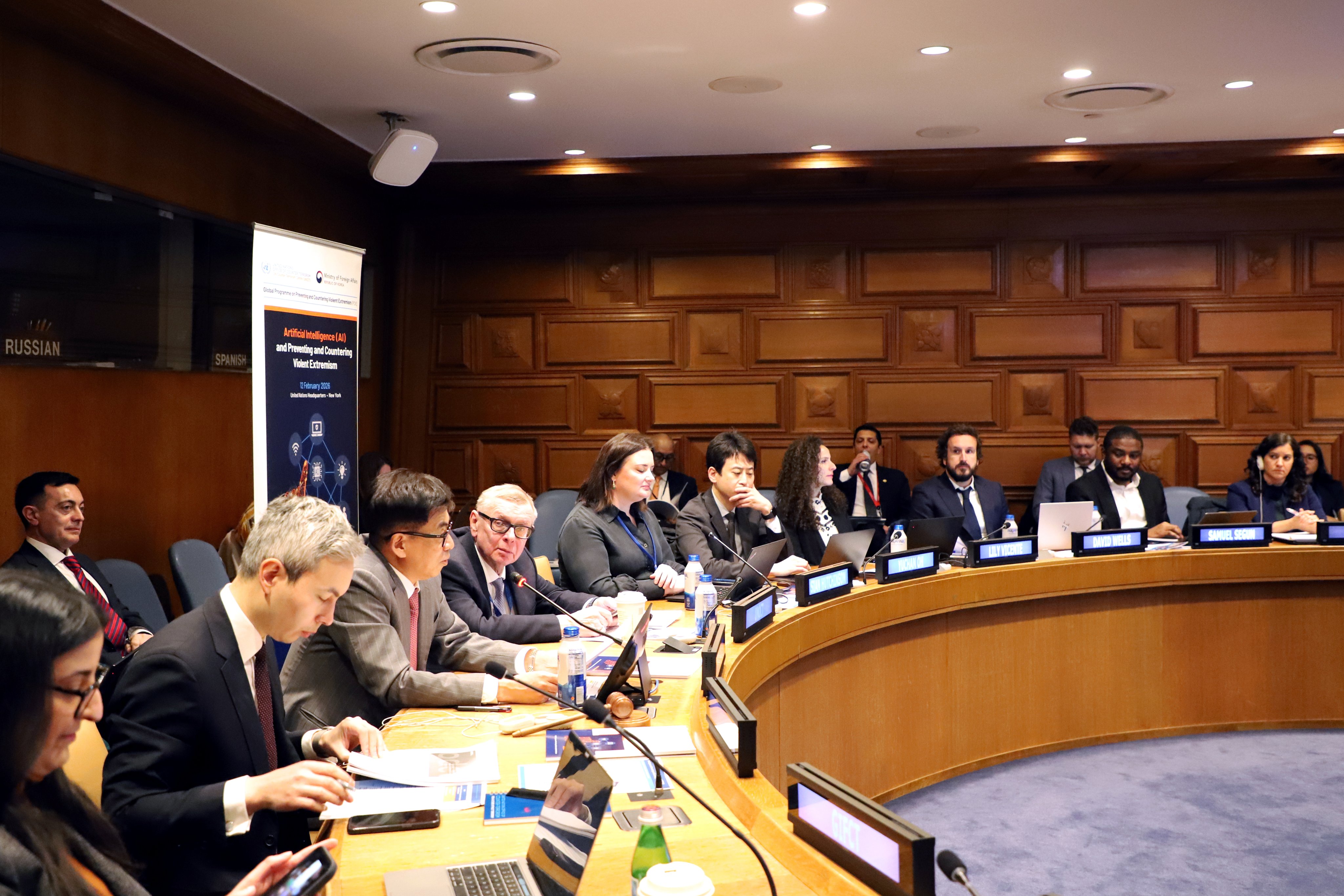
Statement by H.E. Ambassador Jihoon Cha
Permanent Representative of the Republic of Korea
Special Dialogue on AI and PCVE
New York, 12 February 2026
Excellencies, Distinguished Guests, and Dear Colleagues,
On behalf of the Government of the Republic of Korea, I am honored to welcome you to this Special Dialogue. Let me express my sincere gratitude to Mr. Zouev for his exceptional partnership, and to all of you for joining what I believe will be a crucial conversation about one of the most pressing challenges of our time.
The convergence of artificial intelligence (AI) and violent extremism is not a distant threat. It is happening now and evolving rapidly. It demands our immediate, coordinated response.
Korea's decision to sponsor this timely Dialogue stems from both opportunity and urgency. As a nation that has experienced technological transformation, we understand that technology is never neutral. AI can strengthen our resilience and capacity to prevent. At the same time, it can also amplify hate, accelerate radicalization to violence, and foster insecurity.
In this context, as some of you may recall, President Lee Jae-Myung underscored at the Security Council’s open debate that artificial intelligence holds the potential to contribute to peace and security, while also posing serious risks if not properly managed.
Against this backdrop, what troubles us most at this juncture is the asymmetry we are witnessing. Terrorist and violent extremist actors are proving remarkably agile in exploiting AI tools, using social media to manipulate narratives, and leveraging automation to scale their operations. Meanwhile, those working to counter these threats often lack the resources, capacity, and institutional frameworks to respond effectively. This gap is dangerous, and it's widening.
But today is about taking tangible steps to close that gap. It is about moving from principles to practice, from diagnosis to action.
The common challenges posed by AI and violent extremism cannot be solved by any single country or sector. They require the kind of broad multi-stakeholder collaboration we witness in this room – where policymakers learn from practitioners; where technology companies engage with human rights advocates; and where young people bring fresh perspectives to entrenched problems.
This is why my delegation is particularly proud to support the launch of the Practice Guide on AI and Preventing and Countering Violent Extremism. Indeed, it is a practical tool designed for real-world application, helping governments strengthen institutional readiness while ensuring prevention efforts remain firmly grounded in human rights, gender equality, and evidence-based approaches.
Yet Korea's commitment extends beyond this Dialogue. We are prepared to continue working with UNOCT and all partners to translate today's discussions into concrete programs, forward-thinking training initiatives, and dynamic policy frameworks that can be adapted across different contexts.
The Republic of Korea stands ready to support these efforts and to work alongside you in synergizing our shared vision into definitive results to meet the moment at hand.
I thank you. /END/